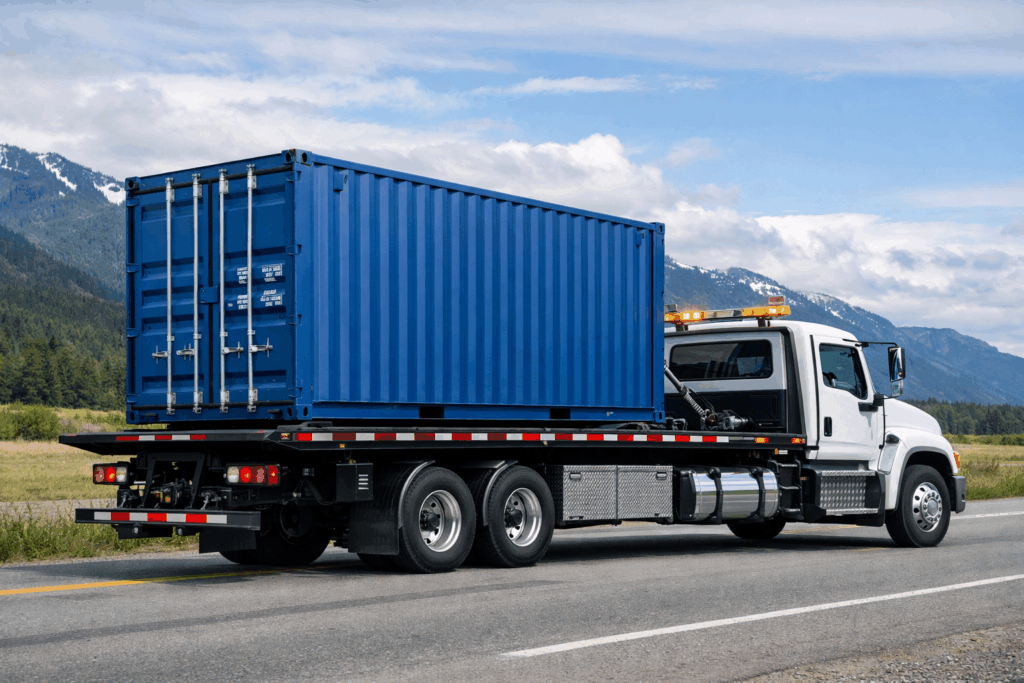
Container and equipment towing is one of the most specialized segments of the towing industry. Unlike standard vehicle towing, transporting containers, machinery, and heavy equipment requires planning, experience, and equipment designed to handle oversized and high weight loads safely.
From shipping containers and job site equipment to commercial machinery and industrial assets, container and equipment towing plays a critical role in construction, logistics, infrastructure, and commercial operations. When these assets need to be moved, precision and accountability matter.
Professional container and equipment towing ensures loads are transported safely, efficiently, and without unnecessary risk to property, equipment, or public roadways.
What Container and Equipment Towing Actually Involves
Container and equipment towing goes far beyond hooking up a load and driving away. Each transport requires a detailed assessment of weight, dimensions, access points, and destination conditions.
Key elements of container and equipment towing include:
Load assessment and planning
Proper equipment selection
Secure attachment and load balancing
Route planning and clearance checks
Controlled transport and placement
Mistakes at any stage can result in damage, delays, or safety incidents.
Types of Containers Commonly Transported
Shipping containers and storage containers are widely used across residential, commercial, and industrial sectors. Moving them safely requires specialized towing configurations.
Common container types include:
Shipping containers used for storage
Commercial storage containers
Job site office containers
Portable storage units
Modified containers used for workshops or equipment housing
Each container type has unique weight characteristics and handling requirements.
Equipment Towing for Construction and Industry
Equipment towing is essential for construction projects, infrastructure work, and industrial operations. Machinery must be transported safely to avoid downtime and mechanical damage.
Equipment commonly transported includes:
Skid steers and loaders
Mini excavators and compact equipment
Industrial machinery
Commercial generators
Agricultural equipment
Professional towing operators understand how to secure and transport equipment without compromising mechanical systems.
Why Container Towing Requires Specialized Experience
Containers are rigid, heavy, and unforgiving when mishandled. Improper lifting or towing can warp frames, damage contents, or cause tipping hazards.
Professional container towing focuses on:
Correct weight distribution
Secure attachment points
Stable transport positioning
Safe loading and unloading
Experience is critical to ensure containers arrive intact and ready for use.
Load Weight and Balance Considerations
Weight distribution is one of the most important factors in container and equipment towing. An unbalanced load can create dangerous conditions during transport.
Professional operators assess:
Total load weight
Center of gravity
Attachment points
Axle load distribution
This ensures stable transport and compliance with safety standards.
Route Planning for Container and Equipment Transport
Not all roads are suitable for container or equipment transport. Route planning reduces risk and prevents clearance issues.
Route planning considers:
Bridge weight limits
Road width and curvature
Overhead clearance
Traffic patterns
Weather conditions
Proper planning prevents delays and damage.
Short Distance vs Long Distance Equipment Towing
Container and equipment towing can involve local job site moves or long distance transport across regions.
Short distance towing focuses on access and placement accuracy.
Long distance towing requires scheduling, securement checks, and route coordination.
Professional towing providers manage both scenarios with the same attention to detail.
Equipment Recovery and Repositioning Services
Not all equipment towing involves standard transport. Equipment may need recovery from uneven ground, construction sites, or unstable positions.
Recovery operations require:
Stabilization techniques
Controlled movement
Proper winching procedures
Safety assessments
Professional recovery prevents further damage and ensures safe repositioning.
Commercial and Industrial Towing Support
Businesses rely on container and equipment towing to keep projects moving. Delays can be costly.
Commercial towing services support:
Construction firms
Industrial operations
Logistics providers
Property developers
Municipal projects
Reliable towing minimizes downtime and supports operational continuity.
Safety Standards in Container and Equipment Towing
Safety is the foundation of professional towing. Containers and equipment present unique risks due to size and weight.
Safety protocols include:
Pre transport inspections
Secure load verification
Controlled loading procedures
Clear communication on site
Compliance with transport regulations
Professional standards protect operators, clients, and the public.
Equipment Placement and Site Coordination
Transport does not end at arrival. Proper placement is critical for container and equipment towing.
Placement considerations include:
Ground stability
Access clearance
Alignment with site plans
Safe unloading zones
Accurate placement reduces the need for repositioning and prevents site damage.
Container Towing for Residential Applications
Containers are increasingly used by homeowners for storage and renovation projects. Residential container towing requires careful access planning.
Residential considerations include:
Driveway access
Ground protection
Proximity to structures
Neighborhood traffic
Professional operators plan residential moves to avoid property damage.
Industrial Equipment Towing Challenges
Industrial equipment often includes sensitive components that must be protected during transport.
Professional towing operators account for:
Mechanical sensitivity
Attachment security
Vibration control
Environmental exposure
This protects equipment integrity throughout the move.
Weather Impacts on Container and Equipment Towing
Weather conditions affect towing safety. Rain, wind, and uneven surfaces increase risk.
Professional operators adjust procedures based on conditions to maintain safety.
Regulatory Awareness in Equipment Transport
Container and equipment towing may involve regulatory considerations such as weight limits and transport compliance.
Professional towing providers stay informed of applicable requirements to avoid delays or violations.
Preventing Equipment Damage During Transport
Improper towing methods can cause costly damage. Professional towing reduces risk through:
Correct securement
Controlled transport speeds
Equipment specific handling
This protects valuable assets.
Why Integrated Planning Matters
Container and equipment towing often intersects with project timelines and logistics. Poor coordination creates delays.
Professional towing integrates planning with execution to ensure smooth transport.
Communication Throughout the Towing Process
Clear communication is critical when transporting containers and equipment.
Professional towing providers ensure:
Clear timelines
On site coordination
Transparent updates
This builds trust and reduces uncertainty.
Choosing the Right Container and Equipment Towing Provider
Not all towing companies are equipped for specialized transport. Choosing the right provider matters.
Key factors include:
Experience with containers and equipment
Proper towing equipment
Trained operators
Safety standards
Reliable communication
A qualified provider protects both assets and timelines.
Why Professional Container and Equipment Towing Is Essential
Attempting to move containers or equipment without professional support can result in damage, delays, or safety incidents.
Professional towing provides:
Experience
Accountability
Proper equipment
Safety focused execution
Supporting Infrastructure and Development Projects
Container and equipment towing supports infrastructure development by moving essential assets efficiently.
Reliable towing keeps projects on schedule and reduces logistical challenges.
The Value of Experience in Specialized Towing
Experience allows operators to anticipate challenges and adapt safely.
Professional experience ensures smoother transport and better outcomes.
Final Thoughts on Container and Equipment Towing
Container and equipment towing is a specialized service that demands precision, experience, and accountability. When handled properly, it supports construction, commercial operations, and infrastructure development efficiently and safely.
Professional towing providers ensure containers and equipment are transported, recovered, and placed correctly, minimizing risk and downtime.
For businesses and individuals requiring container or equipment transport, choosing an experienced towing provider makes all the difference.